The Arable Field: Seasonal Landscape Photography
A wide, open space that's home to my two favourite oaks. The arable field is a landscape that changes quickly. Its mood and personality are tied to the age old rhythms of the plough, the drill, the sprayer and the combine.

27 August 2026.
Stormy skies over the arable field. Prior to this photograph being taken, thunder had been rumbling around in the sky for a couple of hours yet there had been no sign of any much needed rain. This huge cloud gradually made its way over the field from the west and within around ten minutes we had an extremely torrential and long-lasting downpour. I don't think I've ever been so excited to see some rain.

25 July 2026
Whilst I'm used to seeing wood pigeons, crows and jackdaws enjoying insects and grubs on the arable field, since the soil was cultivated earlier in the month, I'm seeing lots more seagulls seeking an opportunistic meal.

25 July 2026
Tracks left by the cultivator as it moves from one section of the field to another. This landscape has been marked by the tracks of oxen, horses, ploughs and other machinery for centuries.

16 July 2026
Towers of straw are gradually loaded onto a waiting New Holland tractor and trailer, ready to be transported to the farm for storage.

22 July 2026
Cultivation begins across the field as the hard, compacted soil is disrupted and readied to make the most of any rain that may eventually fall. The farmer told me that the exceptionally hard, dry ground this year has been causing lots of wear and tear on his equipment. This is the first preparation of the soil for winter wheat planting later in the season.

25 July 2026
Cultivation of the soil continues, broken and tuned on one side of the track, yet untouched on the other. Whilst the field may be devoid of much colour, the strong and varied textures created by the cultivation still create beautiful views.

16 July 2026
A typical British summer arable scene, and one that this field will have witnessed countless times over the centuries. As the bales await collection, they transform the view of the field. The natural form of the veteran oak trees surrounded by almost perfectly geometric bale
10 July 2026
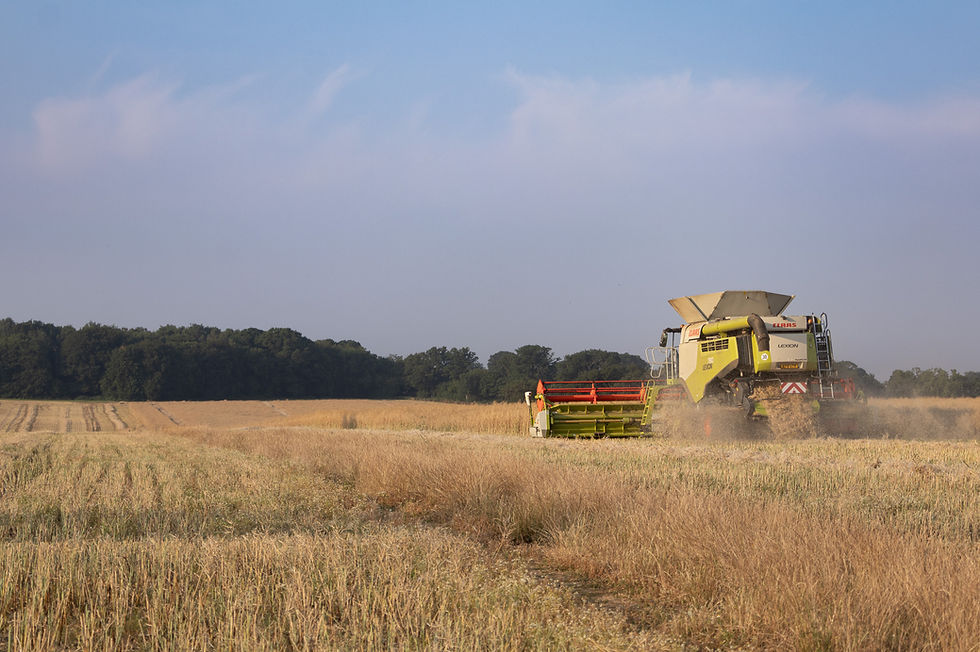
The rape seed plants are now ready to harvest. Each plant will contain thousands of small, black seeds within their pods. A combine harvester makes its way across the field collecting the precious seeds and sorting them from the straw stems of the plants which are left behind on the field. Even though this summer has been incredibly hot and dry, the oilseed rape crop was a successful one. The farmer has said that his winter wheat crops planted on other local fields have suffered this year with lower yields than expected.

15 July 2026
The straw that remains from the harvest is now collected and baled. Soon the field will be littered with hundreds of bales as they await collection.

10 July 2026
As the combine continues its work, it's easy to see which areas are yet to be harvested. Rows of straw are left behind on the harvested areas. These won't go to waste. Soon they'll be collected and baled for use elsewhere.

17 May 2026
This rape seed plant has become a host to a colony of mealy cabbage aphids, taking advantage of the warm, dry conditions to suck nutrient rich sap. Whilst these Brassicaceae loving aphids can multiply extremely fast, little evidence could be seen of them across the wider field. This has been a bumper year for ladybirds - it seems they've done a great job at keeping pests such as these at bay.
24 May 2026
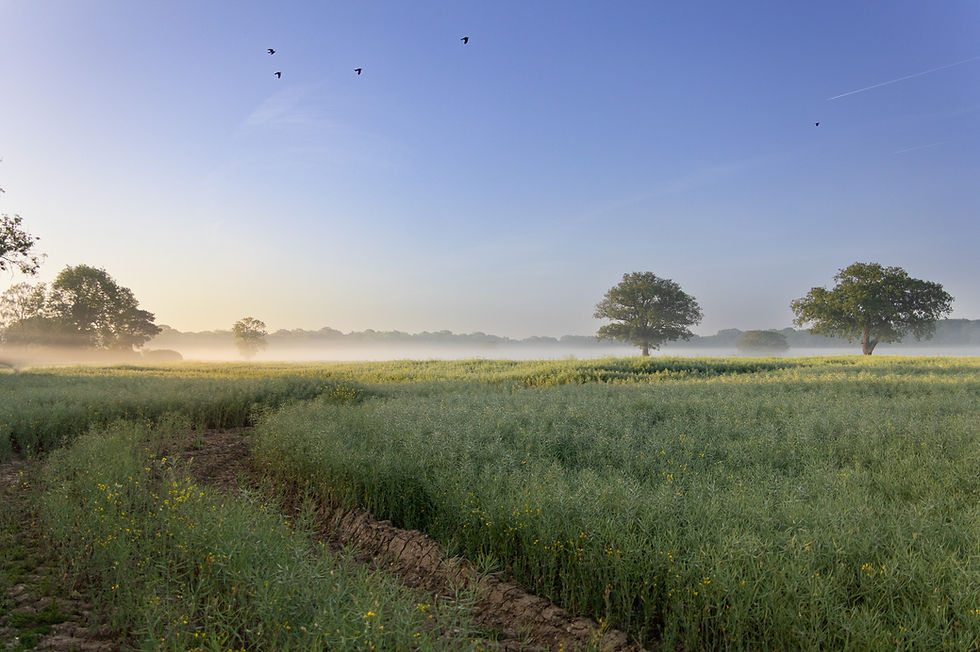
The cold morning air turns to a thin veil of mist as it comes into contact with the warm ground. The rape seed has now almost entirely gone to seed and what was a sea of yellow is turning green. Soon the plants will become dry and straw-like as they reach the end of their cycle.

13 April 2026
A hungry pollinator approaches the oilseed rape plant in search of energy rich nectar. Despite being an intensive agricultural crop, oilseed rape fields provide a massive, early abundance of nectar and pollen for emerging spring insects.
13 April 2026
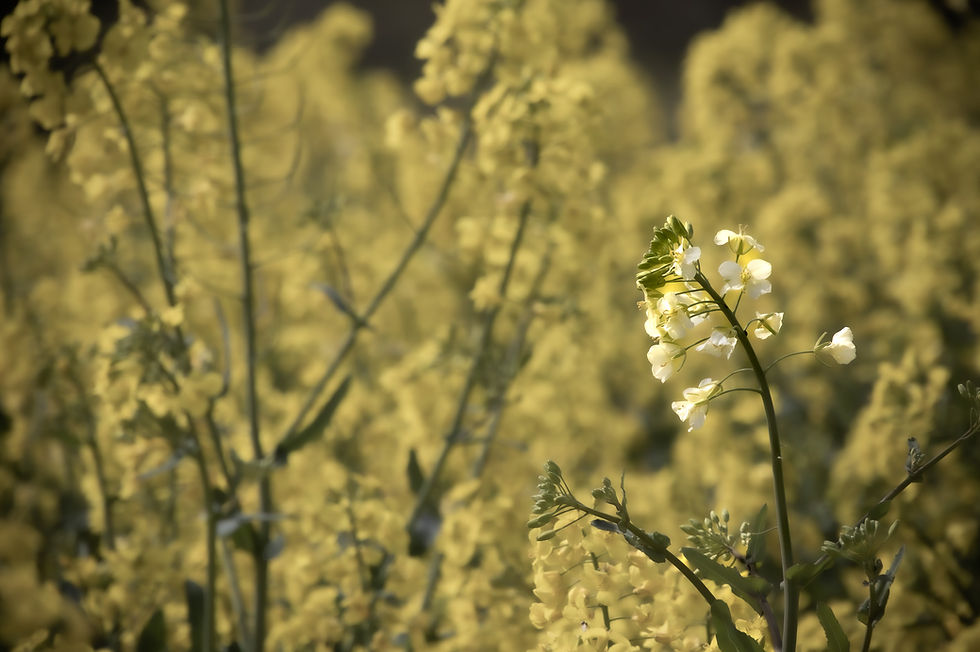
Daring to be different. This one white oilseed rape plant challenges the status quo as it stands against a field of deep yellow.

14 April 2026
A red kite leaves its perch high in the western hedgerow and begins a low swoop across the arable field. These beautiful birds - once critically endangered in the UK, have made an impressive comeback and are often seen circling in the skies over the field. Due to their weak talons, red kites are primarily scavengers and rely heavily on modern farming cycles - swooping down for earthworms in freshly ploughed soil or hunting small voles exposed during harvests.

13 April 2026
The over-performing oilseed rape plant, last photographed in March, still towers above its peers. Seed pods are now evident on its stem as it puts its resources into reproduction rather than growth.

20 March 2026.
Another grey and misty morning in the arable field. The oilseed rape is maturing. This one over-achieving plant towers above the others as it searches for the sun.

8 March 2026.
As the air gradually warms, the moisture builds. The arable field begins to flood at its north-west corner. This is apparently a yearly event and one that the house martins are particularly grateful for when they return in late April to build their mud nests under the eaves of local homes.

8 March 2026.
The sodden field carries the imprints of agricultural vehicles, creating a highway of patterned tracks through the rape field.

25 February 2026.
The oaks, hornbeams and beech trees along the edge of New Wood still stand bare this evening, although the winter sun now carries a little more warmth and the evenings are slowly lengthening.
25 February 2026.
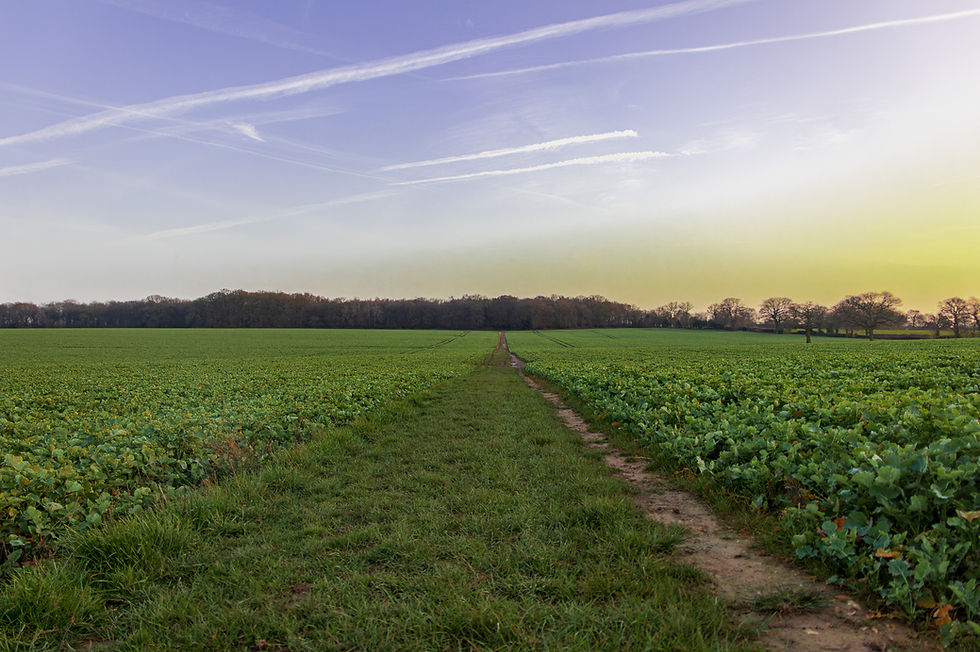
The last of the evening sun gets ready to disappear behind the western hedgerow. New Wood is little more than a shadow at the end of the main track.

28 January 2026.
The oak trees stand in a field of mist. The tender oilseed rape glistens as early morning frosts gradually melt. The tracks of agricultural vehicles cut across the foreground creating deep shadows.

14 January 2026.
The pre-dawn twilight showcases the oak trees' silhouettes as the waning crescent moon makes the most of her last few moments to shine.

26 November 2025.
Just after sunrise on a cold, frosty morning. The oak trees stand naked in a field of young oilseed rape as the early sun tries its hardest to warm the landscape.