19 July 2026 - Western Boundary

Updated: Jul 27
Walk Summary
Time: 07:30
Temperature: Warm
Conditions: Light wind with broken cloud and sunshine.
Route: Beginning along the northern boundary to the west of the main track before turning south along the western hedgerow, half way along its length. A short detour was made to visit the veteran oak standing within the arable field, a short distance from the western boundary.
Highlights
Juvenile Blue Tits in large numbers moving through the hedgerow.
Hazel nuts, ripening blackberries and yellow cherry plums.
Mammal signs including droppings, a burrow and evidence of predation.
Early signs of transition from mid to late summer.
Midsummer Abundance
After the recent heat, the season has advanced noticeably. Earlier flowers have largely disappeared, replaced by developing fruits and seed heads that now dominate the field margins. Rather than the fresh greens of early summer, the landscape has taken on the richer textures of midsummer in preparation for the approaching autumn.

Reading The Ground
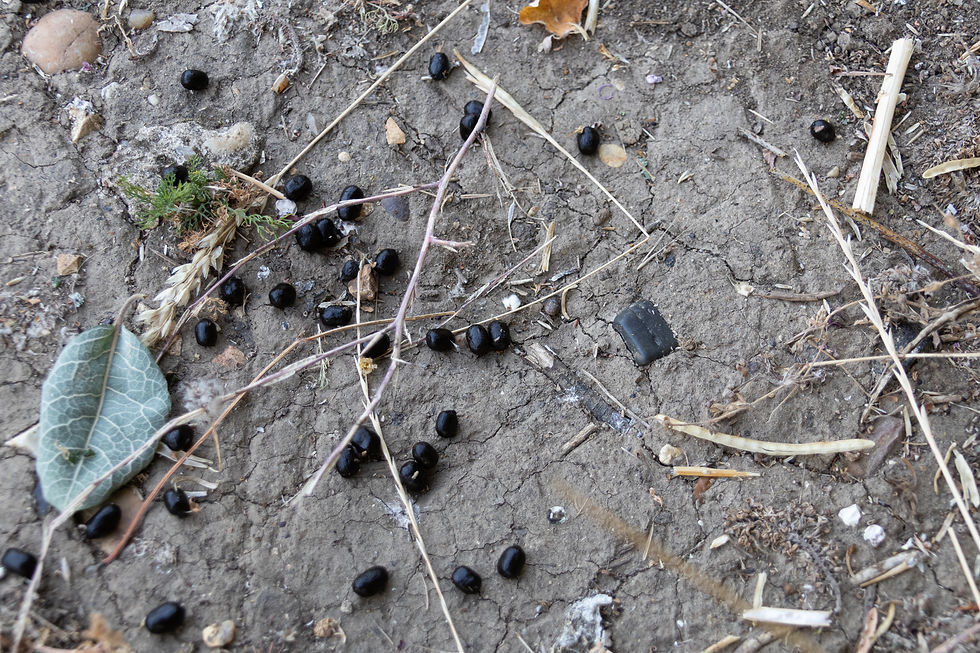
Almost as soon as I stepped onto the footpath along the northern boundary, the ground began to tell its stories. Scattered across the dry, cracked soil were numerous small mammal droppings, suggesting the path itself is used regularly as a route along or through the hedgerow. Although the animal responsible remained unseen (likely a rodent), these subtle signs were an immediate reminder that much of the field's activity takes place in secret.
The Hedgerow Becomes a Pantry
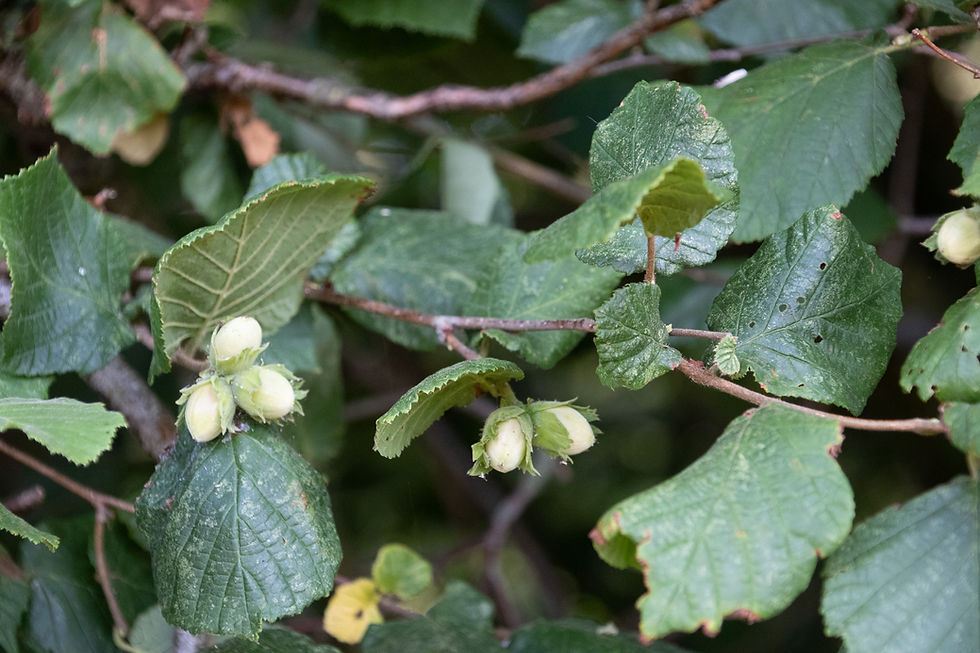
Along the western boundary, hazel nuts continue to ripen beneath their husks, promising an important food source for later in the year. Bramble patches are now producing large numbers of blackberries, many still hard and red but with the first fruits starting to darken.

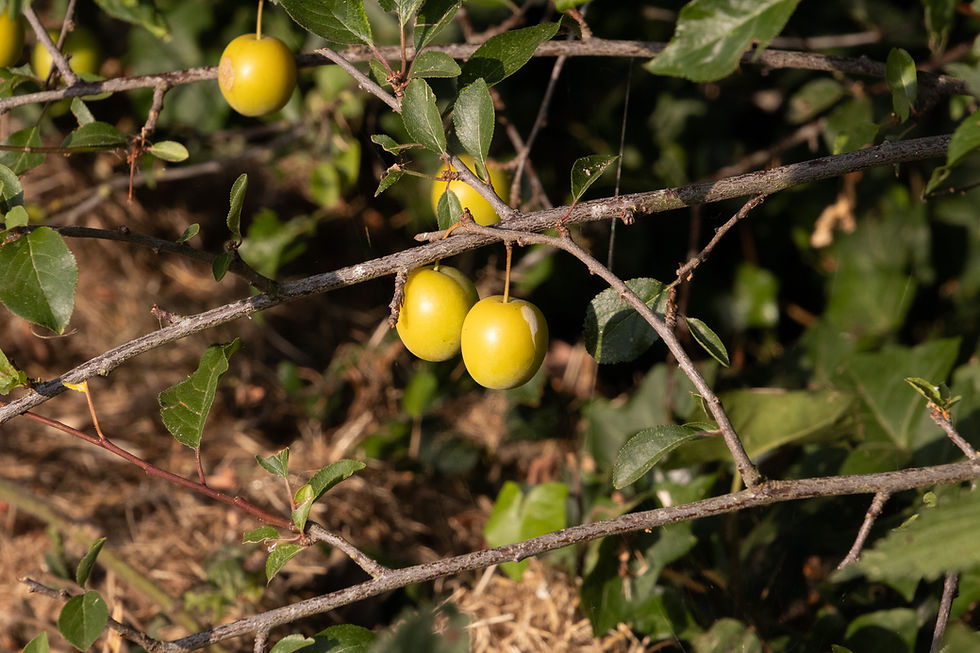
Nearby, yellow cherry plums hang heavily among the branches, illustrating the decades long merging of both wild and cultivated landscapes. Whether planted intentionally or spread from neighbouring gardens, they now form part of the hedgerow's seasonal rhythm.
Juvenile Birds Finding Their Place
Although they remained largely hidden, one stretch of hedgerow was filled with both juvenile and adult Blue Tits - a good sign of a successful breeding season. Their constant movement and contact calls betrayed their presence as they moved through the shrubs
Beneath The Veteran Oak
Leaving the hedgerow briefly, I crossed to the veteran oak which stands a short distance away within the arable field. Even within an open arable landscape, the tree forms a habitat in its own right. Its broad canopy provides a cooler patch of shade, while rough bark, exposed roots and accumulated leaf litter provide shelter for many smaller organisms.
Around the base of the tree, signs of mammal activity were immediately apparent. A small burrow disappeared beneath the roots, while nearby lay several small clumps of soft grey-brown fur. - a recent act of predation, most likely under the cover of dusk or dawn.
Rather than witnessing wildlife directly, these traces reveal the lives unfolding just outside of my observation. The veteran oak acts as far more than a solitary tree within a field; it provides an island within the immediately open landscape where shelter, hunting opportunities and many other ecological interactions converge.

Human Traces
The hedgerow also continues to record human presence. Partially concealed beneath some ivy lay a glass bottle, easily overlooked amongst the vegetation but reminding me nonetheless that these rich wildlife margins remain places where human activity and the natural world continue to overlap in ways that are sometimes beneficial and other times not.

Reflections
Although relatively few animals were seen directly during the walk, the landscape felt anything but quiet. The juvenile Blue Tits noisily moving through the hedgerow, the ripening fruits, the mammal signs beneath the veteran oak and the scattered signs of predator and prey all pointed towards a countryside that's full of life, although largely in private.
Mid July marks a subtle transition. The full on assault of early summer has passed, yet autumn's abundance hasn't yet fully arrived. Instead the field exists in a quieter phase of preparation, with fruits ripening, young birds dispersing and wildlife leaving only fleeting evidence of its presence for those willing to look.
Looking Ahead
The field feels poised between two seasons. Summer still very dominates much dominates the landscape, yet subtle changes are beginning to emerge. The hazel nuts will continue to ripen, the blackberries will change from red to black and the yellow cherry plums may soon begin to fall. Along the hedgerows, many of this year's fledged birds will become quieter and less noticeable as they disperse and learn to forage independently.
The veteran oak is likely to remain a focal point for wildlife throughout the coming weeks. Returning to it regularly may reveal fresh signs of mammal activity, or perhaps the first hint of autumn within its canopy. As always, the aim isn't simply to record what is present, but to observe how the landscape changes, one visit at a time.

Comments