21 July 2026 - Main Path, Oak Trees, Southern & Western Hedgerow Boundaries.

Updated: Jul 27
Walk Summary
Time: 10:00
Temperature: Warm
Conditions: Cloudy with a light breeze
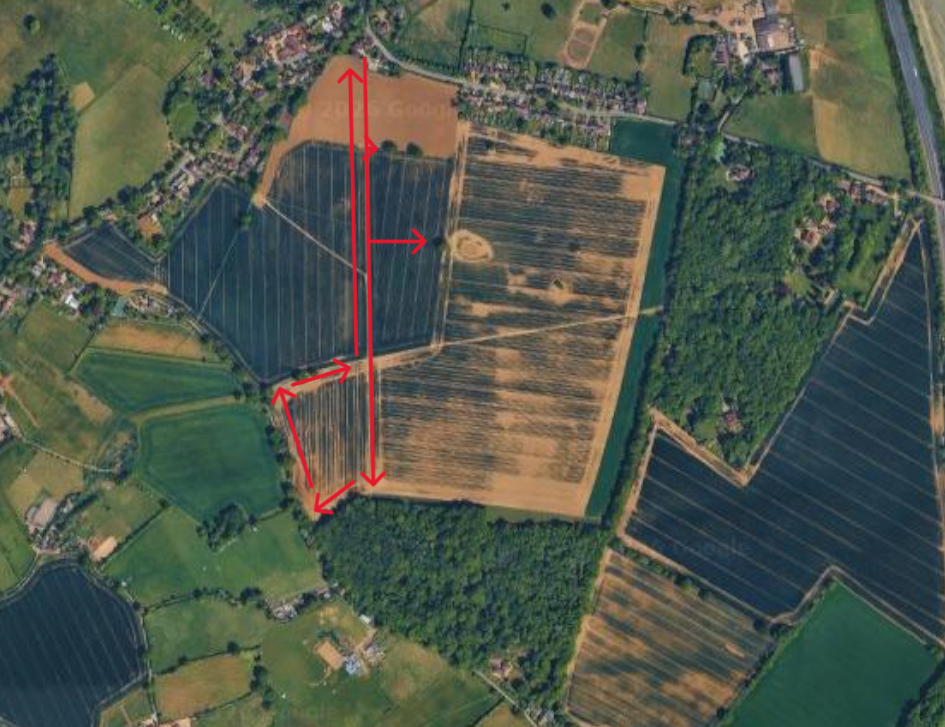
Route: South along the main footpath that cuts through the arable field, to the woodland at the south boundary. I stopped at 3 of the veteran oaks along the main footpath on my way down to the woodland. Once I reached the woodland, I turned right along the southern boundary and then right again along the western boundary. I turned right again halfway along the western boundary to view another of the oak trees before returning to the main footpath and heading north back to home.
Highlights:
Exploring cavities within the oak tree roots
Bird carcass and evidence of predation
Hedgerow fruits and berries
Fox evidence
Dead oak tree
Veteran Oak Trees
The oil seed rape has only recently been harvested and this was my first walk down the main footpath since the harvest was completed. The landscape has changed massively. The towering rape seed plants have now been reduced to dried stalks of around 15-20cm leaving the 3 veteran oak trees situated within the field off the left side of the path far more exposed, and I thought easier to reach.
Sensing the opportunity to explore the trees further, I made my way off the footpath. Although the density of the mature rape seed has been much reduced, the short walk over to the oaks was harder than I had imagined. The tough, sharp stalks that have been left behind are lethal to the ankles and lower shins and with around 55 stalks per square metre, going was treacherous!
Reaching the first 2 oak trees, I made my way around them both. There was nothing particular to note around the first, although the few orange leaves I could see in its canopy are a sure indicator that autumn is on its way, the leaves probably turning faster due to the long, hot dry spell we've been experiencing. On reaching the second oak tree and exploring its perimeter, I was fascinated by the hollows that exist within the trunk.

The hollows appeared all the way around the trunk, suggestive to me of the fact that the tree itself is now growing around a large central cavity. Looking inside the hollows, I found some interesting things - some expected and some less so.
One of the large hollows contained animal droppings, a mix of possibly rabbit and fox. Another contained what looks to me like an old rake head, clearly a remnant of historical agricultural activity.

Moving on from the first 2 oak trees, I made my way (carefully) over to the 3rd.
On approaching the tree, I could see immediately that a recent act of predation had taken place. The carcass of a medium sized bird was lying next to the tree and the colour of the many feathers scattered around led me to think it was a pigeon. There was clearly fox scat close by, but whether a local fox was the predator is uncertain.
I made by way back to the main footpath to continue my walk south.


Beech Nuts At the Woodland's Edge
On approaching the edge of the woodland which marks the southern boundary of the field, I was met with a cascade of beech leaves and maturing beech nuts. It was a breezy day, so the beech tree branches hanging low with fruit, swung in beautiful waves. Right now the beech nut husks are still closed and greenish-yellow but come September they will begin to dry and turn brown before splitting open and releasing their shiny brown triangular nuts.
Beech nuts are an important food source for many species of mammals and birds. It makes me wonder what footage I may capture on my trail cam if I position it in this area come September/October.

Fruiting Hornbeam
Alongside the beech tree was a heavily laden hornbeam birthing many fruiting three-lobed bracts, the developing green nutlets camouflaged perfectly within. In September, these bracts will begin to turn straw coloured and when they drop they'll help the seeds spin away in the wind.
Hornbeam seeds are smaller and less nutritious than beech nuts but are still an important food source for smaller mammals and birds..

Dead Oak Tree
Having walked westwards along the woodland edge at the southern boundary of the field, I now turned right to follow the western boundary hedgerow.
Bracken is growing well along this boundary, its deep greens a welcome splash of colour along the mostly yellow and brown grasses.
Midway along this boundary stands a large dead oak tree, its branches completely visible and striking in their twisted forms. Ivy almost completely covers the trunk of the oak. On the fields edge below, large sections of fallen bark slowly decay.
Whilst the oak tree will never again experience growth, it still has an incredibly positive impact on the landscape. It continues to provide shelter to insects within its ivy shroud and the ivy itself supported by the tree provides a food source. The decaying bark will provide nutrients that will be carried deep into the soil structure below.

Reflections
It strikes me that in many ways todays field note entry has been about death. Whether it's the carcass of a bird, or a dead oak tree, death plays a vital role within our natural landscapes.
The carcass very clearly provided a welcome meal for something, possibly a fox and whilst the benefits of that meal may be short term, they are of course important. The dead oak tree will however benefit the health of the landscape for many more years to come, unless it's determined to be unsafe and is removed.
Nature is always operating in cycles. We see it within the life the landscape contains but also within death. We see it in the changing seasons and even in the simple transition between day and night.
The hornbeam bracts which will eventually seed and the beech nuts which will eventually fall are also examples of these cycles. While their host trees remain healthy, the act of birthing their seed and then withdrawing into their winter slumber is a cycle which culminates in a short late autumn death before their rebirth in spring.

Comments